
Short answer
A LOC type clamp is a fastening element with a circular body fitted with a locking collar and a screw mechanism; it does not slip off the fitting or camlock it is mounted on. It is usually made of 316 stainless steel, and of aluminium for other uses; size and capacity are chosen according to the load and the application.
Source: S115
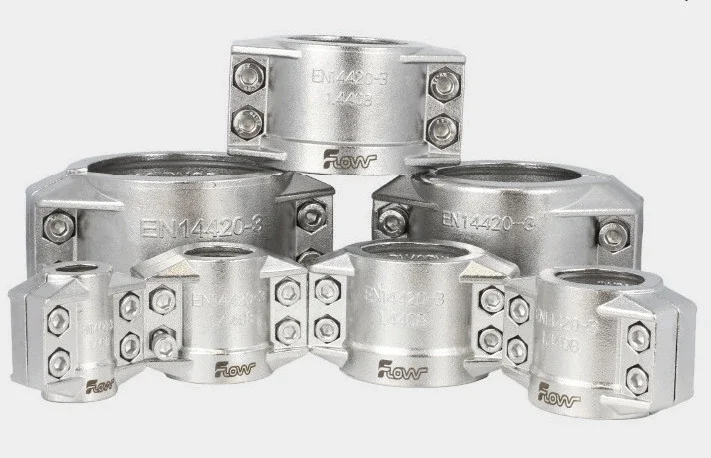
Design
LOC type clamps are fastening elements that work with a circular body fitted with a locking collar and a screw mechanism. The locking collar prevents the clamp from slipping off the part it is fitted on, such as a fitting or a camlock, and provides a secure connection.
Source: S115
Material
LOC clamps are usually made of grade 316 stainless steel, which makes them durable and reliable; they are designed to withstand heavy loads and harsh environmental conditions. Aluminium (AW6082) versions are also available for other areas of use.
Source: S115
Areas of use
LOC type clamps are used for assembling and securing industrial hoses, loading and unloading, transport, construction, shipbuilding and many other areas.
Source: S115
Assembly and use
LOC clamps are easy to use and quick to fit. The locking collar design makes the clamp grip the fitting tightly and resists loosening or slipping.
Source: S115
Variants
LOC clamps are made in different sizes, capacities and designs. Flow brand LOC clamps are available in 316 stainless steel or aluminium.
Source: S115
Safety and selection
- LOC type clamps work safely when they are fitted correctly and used within their rated capacity.
- Proper use and periodic maintenance are important for safety.
- When choosing a clamp, select the size and capacity that suit the load and the requirements of the application.
Source: S115
Source coverage
-
S115
Loc Kelepçe Flow Hose · accessed 2026-11-06 DesignMaterial; VariantsAreas of useAssembly and useSafety