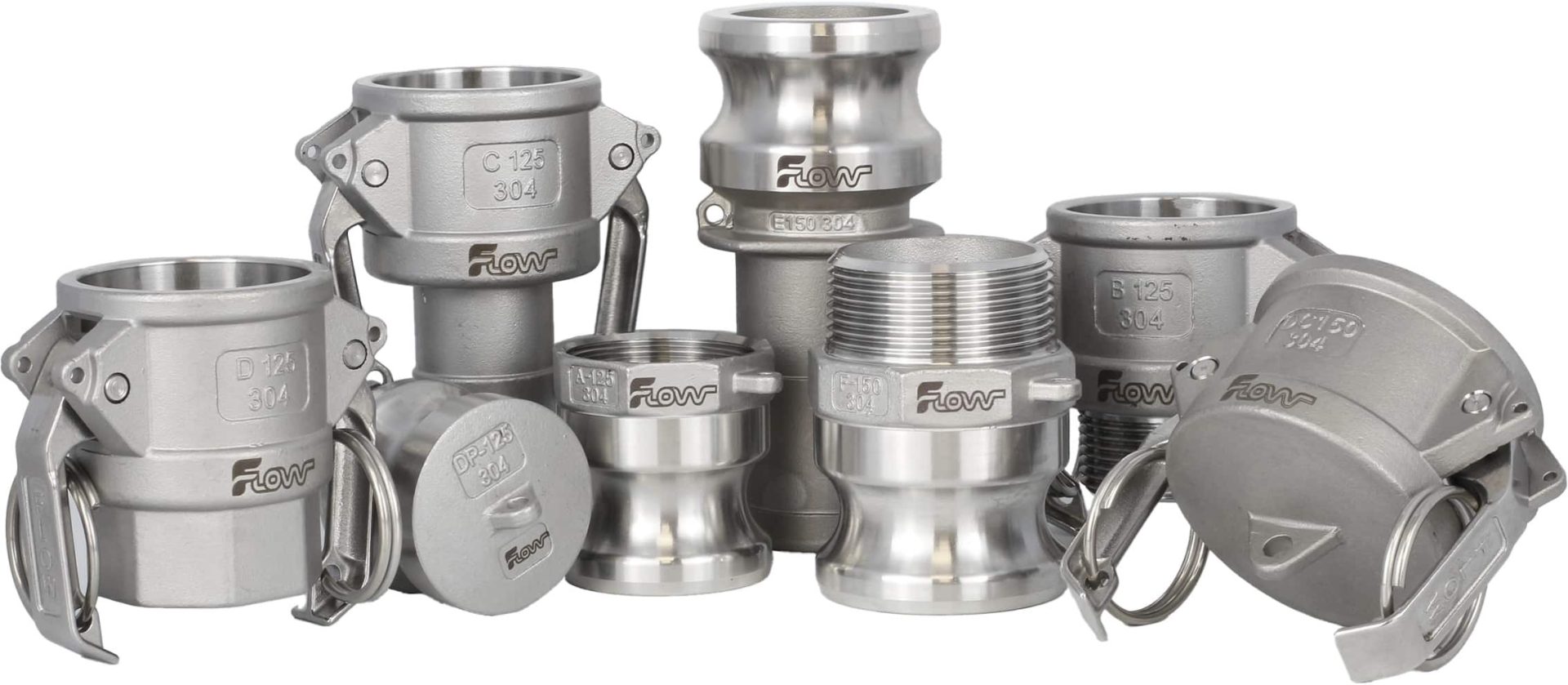
Stainless steel camlocks are widely used fasteners in the industry. In order for these products to be long-lasting and durable, it is critical that they are produced with the right material quality. While the most common stainless steel grades on the market include varieties such as 304, 316 and 316L, in some cases, lower grades (such as 202 or 430) can also be sold as “316”. This can lead to significant differences in the performance and lifespan of the material.
Stainless Steel Grades in Camlocks
1. 304 Stainless Steel: Grade 304 stainless steel is one of the most widely used materials on the market. This type of steel contains 18% chromium and 8% nickel. 304 stainless steel offers good corrosion resistance and is preferred in food processing, the chemical industry and various construction applications. However, its corrosion resistance is limited in environments with high salt concentrations, such as seawater.
2. 316 Stainless Steel: Grade 316 stainless steel has higher corrosion resistance than 304. This is because it contains 16% chromium, 10% nickel and 2% molybdenum. Molybdenum increases the resistance of the steel, especially in chloride-containing environments. For this reason, grade 316 stainless steel is used under more demanding conditions such as marine applications, chemical plants and medical equipment.
3. 316L Stainless Steel: 316L is the low carbon version of 316 quality. Its low carbon content increases weldability and reduces the risk of post-weld corrosion. 316L can be preferred in all areas where 316 is used and offers a safer option, especially in areas where welding operations are frequent.
Effect of Quality Differences on Usage
Corrosion Resistance: While 304 grade stainless steel generally provides adequate performance in environments with low and medium corrosion risk, 316 and 316L grade steels provide higher protection. 316 or 316L should be preferred, especially for aggressive environments such as chloride and sea water. Lower quality steels (such as 202 or 430) may be quite weak against corrosion and this may cause the product to rust quickly and lose its function.
Cost and Durability: Grade 304 steel is more economical than grade 316, but offers lower corrosion resistance. Therefore, a balance must be struck between cost and performance depending on the environment in which it will be used. Steels such as 202 or 430 may be cheaper, but in the long run, they may increase the cost due to corrosion and other problems.
Mislabeling and Its Consequences: It is seen that some companies in the market label low-quality steels such as 202 or 430 as 316 and sell them. This poses a great risk to consumers. Since the expected corrosion resistance cannot be provided, products can quickly lose their function and safety problems can arise for users. For this reason, it is important to request a material certificate when purchasing products and to shop from reliable suppliers.
Conclusion
The quality of stainless steel camlocks should be selected according to the area of use. Using quality stainless steels such as 304, 316 and 316L correctly will provide long life and durability. However, incorrect labeling of lower quality steels can lead to serious problems. Therefore, choosing the right quality and working with reliable suppliers will ensure product performance and safety.